
In 2018, many telecom companies officially announced their plans to deploy 5G technology. From the very beginning, the new generation of mobile networks promised faster speeds and better connectivity.
However, the first reactions were not entirely positive. Scientists and doctors from several countries raised concerns. In some regions, groups even signed moratoriums calling for a pause in 5G implementation until further research could be completed.
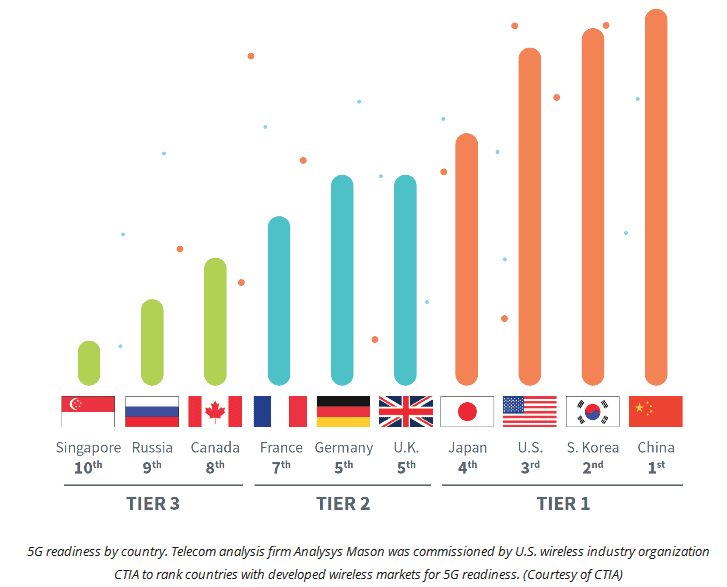
Despite the debate, the rollout continued. By 2020, many countries had already launched commercial 5G networks. Today, several global markets lead in 5G coverage and adoption.
This raises an important question: What exactly is 5G, and how does it differ from 4G?
What Is 5G?
5G stands for fifth-generation cellular wireless network. It is a cloud-based technology that connects mobile devices to the internet faster and more efficiently than previous generations.
Unlike 4G, which relies heavily on physical cables and centralized infrastructure, 5G uses cloud-based signal processing. Cellular towers amplify these signals, reducing the need for extensive cabling in many areas.
As a result, 5G delivers:
- Faster data transmission
- Lower latency
- Higher capacity for connected devices

How 5G Differs From 4G
Although people often describe 5G as revolutionary, it remains an incremental upgrade over 4G in many everyday use cases.
However, several key differences set the two technologies apart.
Four Key Factors That Define 5G Performance
1. Speed
5G offers significantly higher speeds than 4G. Downloads happen faster, and streaming quality improves. As a result, users experience smoother video calls and quicker access to online services.
2. Latency
Latency refers to the delay between sending and receiving data. 5G drastically reduces latency, which makes real-time communication more reliable.
This improvement benefits:
- Video conferencing
- Online gaming
- Remote work tools
3. Bandwidth
5G supports many more connected devices at the same time. This matters in crowded areas and smart environments where thousands of devices operate simultaneously.
4. Interference
5G handles interference more efficiently. Even when many frequencies operate in the same area, the network maintains stable performance.
Truth or Myth: Will 5G Change the Way We Communicate?
In practice, 5G improves how we use existing services rather than completely changing them.
Users gain:
- Faster browsing
- Better streaming quality
- More reliable connections
However, most daily applications already work well on 4G. Therefore, the biggest impact of 5G appears in device density, automation, and smart infrastructure, rather than basic smartphone use.
5G Devices and Accessibility Challenges
Smartphones remain the primary way people access the internet. However, users can benefit from 5G only if their devices support it.
Currently:
- 5G phones cost more than 4G devices
- Mid-range and budget phones adopt 5G more slowly
- Full market penetration takes time
As a result, widespread adoption will happen gradually as device prices decrease.
5G and Smart Cities
One of the most promising use cases for 5G lies in smart cities.
Thanks to low latency and low interference, 5G enables seamless communication between thousands of connected devices.
These include:
- Traffic sensors
- Smart lighting systems
- Emergency response tools
- Utility monitoring devices
5G allows data to move across the city almost instantly. This supports better risk management, emergency coordination, and resource optimization.
As cities grow and become more complex, reliable high-speed communication becomes essential.
Is 5G Safe for Humans and the Environment?
Public concern around 5G safety has grown alongside its deployment.
The debate centers on millimeter-wave frequencies, which range between 30 GHz and 300 GHz. These frequencies travel shorter distances than 4G signals. As a result, networks require more antennas placed closer together.
However, these antennas are:
- Smaller than traditional cell towers
- Lower in power output
- Designed for dense urban environments
Conflicting Scientific Opinions
Government agencies such as the CDC and EPA state that 5G radiation levels fall within established safety limits.
At the same time, over 215 scientists from 40 countries have urged the United Nations to reassess electromagnetic field (EMF) exposure standards. These researchers cite studies showing biological effects linked to long-term EMF exposure.
The FCC, however, continues to support rapid deployment. The agency prioritizes infrastructure expansion and limits local restrictions on 5G installations.
So, What Is the Right Approach?
5G represents the future of connectivity. Faster networks will support innovation, automation, and smarter infrastructure.
At the same time, responsible deployment matters.
Individuals can:
- Limit unnecessary device use
- Reduce prolonged exposure
- Stay informed about EMF research
Balanced awareness helps users benefit from technology while making informed choices.
Final Thoughts: Progress With Responsibility
5G technology brings undeniable improvements in speed, capacity, and efficiency. It enables smart cities, connected devices, and next-generation digital services.
However, like all emerging technologies, it raises important questions. Ongoing research, transparent regulation, and informed adoption remain essential.
The future of communication is fast approaching. Understanding 5G helps us prepare for it wisely.
How 2026 Will Transform Wireless Connectivity Forever
The telecom landscape is evolving faster than ever. From AI-native networks to satellite-cellular convergence, 2026 marks a turning point where…

CPaaS 2025: Top Trends, Innovations, and What’s Next
In an era where digital-first communication is no longer optional but essential, Communications Platform as a Service (CPaaS) has become…
Why Human-First Communication Will Define the Next Decade of Business
In an age of automation, AI, and hyper-connectivity, businesses are realizing something vital: customers crave authenticity. The companies that thrive…